
What is Digital Signage and what is needed
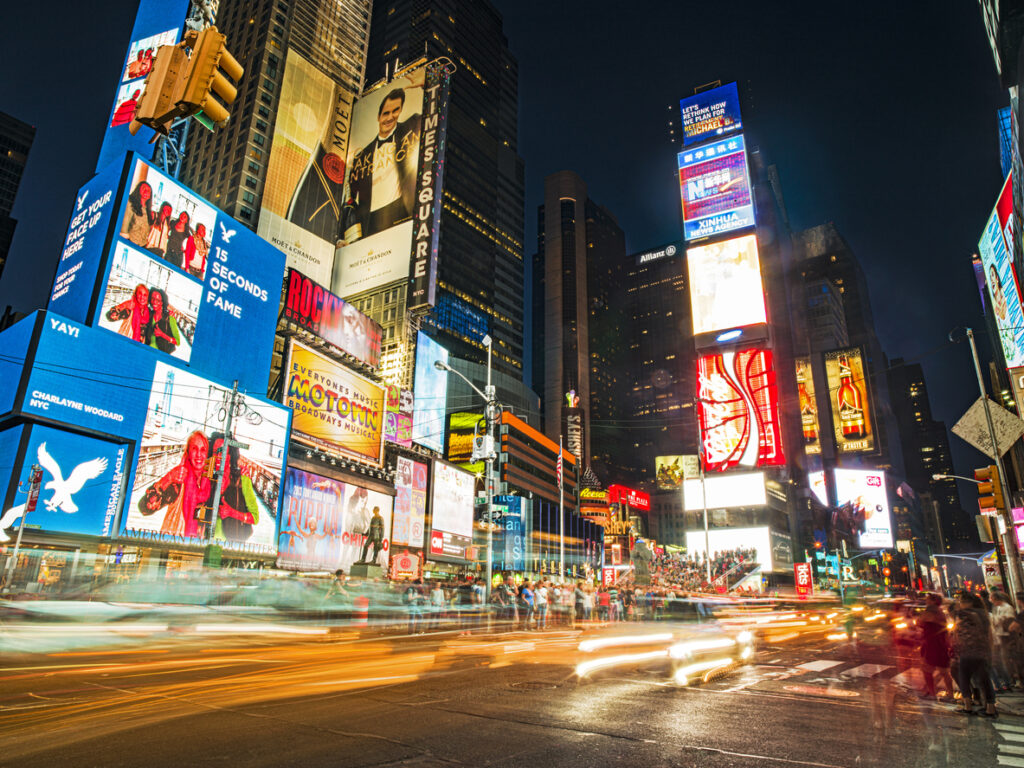
11 May 2022What is digital signage? You don’t need a technical definition to understand that. The answer is visible around us: just look at our cities that are now scattered with displays of all shapes and sizes in squares and shops, stations and public offices, hotels and airports. The digital signage, which we could translate from English as “digital signalling”, is a powerful communication tool, able to communicate with the customer to inform and entertain him.
In recent years the technology has developed rapidly and has not set aside any scope, even reaching to transform what many considered as old and outdated signboard in a digital tool of communication/publicity capable of playing web content, videos and images with or without music.
But to define digital signage as a version of digital signage would be very reductive. Digital signage is much more than this. Includes both interior ledwalls up to outdoor led maxiscreens we see in our metropolis both customer smartphones and when necessary can transmit the same content. Its applications range from advertising and promotional communication of shops to institutional and informative communication of public bodies. But you can also find events, conferences, museums or fairs as route indicators. In general, according to the latest data collected to ask for digital signage solutions are mainly the world of retail and hospitality: hotels, restaurants, SPA, but also the world ofinfotainment and transport.
Many may seem a little familiar but in reality digital signage is part of our daily life. It gives us information more often than we believe: tells us if our turn has come to the emergency room or if the train is coming, but at the restaurant it can simply become our menu. The potential of this form of proximity marketing are many.
What is digital signage?
With Digital Signage, from a technical point of view, we mean the dynamic transmission process of audio content and digital video on multiple screens installed in different places in order to send information that can be news, advertising, emergency messages, or more simply images and videos.
Technology thus becomes a fundamental resource for citizens, travellers, customers, patients or visitors, able to inform them in real time. In retail, its main purpose is to increase sales and to retain customers.
How does digital signage work?
The system, at a hardware level, consists of one or more monitors connected to the network via a player. The content is updated by the central server and the player reproduces the contents on one or more display panels. The server receives content from a terminal or Cloud that manages message programming remotely through a Content Management System platform. In our case it is HECH Romeo.
There are several Content Management System (CMS) solutions on the market but despite these platforms they are very intuitive, to use them it is better to have digital skills so that they can manage communication spread through the screens. We offer training courses to those who decide to use our web app HECH Romeo. Many might mistakenly think that just a TV to do this. In fact beyond an aesthetic aspect, the digital signage monitors differ greatly in terms of technical specifications. For example, a TV would consume much more if it was on all day. In addition, in certain light conditions, as in the sun, it would not be visible due to the difference in the panel and the backlight of the pixels.
What is digital signage for?
Digital signage solutions have different purposes that we could sum up in:
- They are useful for providing travel information with static or interactive images such as stations and airports.
- Promote. In this case they take the place of the classic billboard and are able to convey the same promotional messages but even more engaging.
- Digital signage monitors can also be used to accompany customers on their journey through shopping centres with the aim of extending their time of stay.
- Improve customer experience. Digital signage monitors and tools also use black restaurants and hotels. In this case, for example, the customer can order through a tablet that shows the preparation of the recipe.
- Amazing. Digital signage also has a strong scenic impact. More and more artists use the versatility and brightness of led screens to expose their works or creative work.